Pillows & Adjustable Beds
Finding the Right Pillow Loft for an Adjustable Sleep Position
Elevating the head of a bed can reshape the relationship between shoulders, neck and pillow. A loft that feels comfortable when lying flat may feel too high—or not supportive enough—once the bed moves. The right fit depends on more than a pillow’s listed height: sleep position, fill, compression and the angle of the bed all matter.
An adjustable bed changes the geometry of rest. Raise the head section and the upper body moves from a level surface into an incline. The shoulders may settle differently; the head may shift relative to the mattress; and a pillow that once filled the space beneath the neck may begin to push the chin forward or leave the head unsupported. These are small changes with an immediate effect: the familiar pillow can suddenly feel like the wrong one.
That does not mean every adjustable-bed user needs a new pillow, or that one precise loft works for everyone. It means pillow choice is best judged in the position where the person actually sleeps. A pillow that supports comfortable alignment while the bed is raised may be a different shape or height from one that works well when the mattress is flat.
Understanding loft, compression and adjustability can make the search more systematic. Instead of buying by label or guessing from a pillow’s uncompressed height, sleepers can observe how their head and neck feel at their usual settings, then make measured changes. Adjustable fill can be useful here: it allows a person to test a little less or a little more loft rather than committing to a fixed shape from the outset.
What pillow loft means
Loft is the height of a pillow, often described as low, medium or high. In practice, it is not a fixed measurement once someone lies down. A pillow’s effective loft depends on how much it compresses under the head, how the filling moves, and how firmly the pillow is held in place by the sleeper and bedding.
A soft pillow may look substantial on a bed and compress considerably under weight. A resilient filling may retain more height. A pillow with a zipper and removable fill can be adjusted, while a sewn-closed pillow generally offers fewer ways to change its shape. None of these features alone determines whether a pillow is suitable; they describe how it behaves and how much control the sleeper has over its feel.
The goal is not to force the neck into a rigid ideal or to hold the head perfectly still. A useful pillow provides comfortable support while allowing the head and neck to rest in a position that feels natural. If the pillow is too high, the head may be tipped forward or sideways. If it is too low, the head may fall back or the neck may feel unsupported. The sensation can vary with sleeping position and with the bed’s incline.
Why elevation changes the fit
When the head of an adjustable bed rises, the torso and shoulders travel with the mattress section. The pillow remains between the head and the bed, but the surrounding angles change. Depending on the person, the pillow may compress in a different way, shift toward the headboard, or create a more pronounced bend at the neck. The mattress itself also contributes: its surface, firmness and ability to flex can affect how the shoulders settle.
This is why a pillow that feels fine during a quick test in a flat position may disappoint after the bed has been elevated for reading, relaxing or sleeping. A raised position can make a thick pillow feel more intrusive, particularly if it pushes the chin toward the chest. In other cases, the incline changes where the head rests, and a sleeper may prefer a little more cushioning or support. The direction and degree of change are personal.
Bed elevation is not a substitute for medical care. People may raise the head of a bed for comfort, convenience or reasons discussed with a clinician, but an adjustable base and pillow cannot diagnose or treat a health condition. Anyone changing sleep position to address a medical concern should ask a qualified health professional for advice, especially if symptoms are persistent or worsening.
Begin with the position you actually use
Before changing pillows, set the bed to the position used most often for sleep. A position used only briefly while reading may call for different support from the position maintained through the night. If the bed has several presets, consider testing the one that is most representative rather than relying on a showroom demonstration or a single moment of comfort.
Then settle in naturally. Avoid holding the head in place or deliberately stretching the neck to make a pillow seem suitable. Notice whether the head feels balanced, whether the chin is comfortably positioned, and whether the neck feels gently supported rather than pressed or suspended. Give the body a little time to settle; a pillow can feel different after its fill has shifted and the mattress has taken weight.
It can help to compare the raised position with the flat position. If the same pillow feels comfortable in one setting but not the other, the contrast is useful information. It may point to a need for adjustable fill, a different pillow shape, or a modest change in the bed’s angle. It does not automatically mean that the pillow is defective or that a new one is required.
Sleep position matters
Side sleepers generally need enough loft to fill the space between the side of the head and the mattress, with the amount influenced by shoulder width, mattress firmness and how deeply the shoulder sinks. On an adjustable bed, the upper body’s position can affect how that gap feels. A pillow that is too low may leave the head angled down; one that is too high may angle it upward. The aim is comfortable, steady support—not a prescribed height that ignores the person’s proportions.
Back sleepers often prefer a lower or more moderate loft, but preferences differ. A raised bed may change the way the head rests, and a pillow with substantial height may feel more noticeable under the neck. Watch for a sense of the chin being pushed forward or the head being held in a strained position. If the pillow feels as though it is doing too much, removing some fill or trying a lower-profile option may be worth testing.
Stomach sleeping usually places different demands on the neck because the head is turned to one side. A high, firm pillow may add to that rotation. People who sleep partly on their stomach or move between positions may need to consider how the pillow performs during those transitions, not just in their starting position. The bed’s elevation can make some positions less comfortable, so changes should be gradual and guided by comfort.
Many people do not stay in one position all night. For combination sleepers, a pillow that is adjustable or responsive can be easier to fine-tune than one that holds a single pronounced shape. Still, a pillow cannot guarantee alignment in every posture. It is reasonable to choose a comfortable compromise for the most frequent position and reassess if the pillow repeatedly shifts or loses support.
Fill and compression: the feel beneath the label
Two pillows with similar advertised loft can feel quite different. Fill material, construction and firmness affect how much height remains under pressure. Down and down-alternative fills are typically associated with a softer, more moldable feel, though their performance depends on construction and quantity. Foam and latex may feel more resilient or responsive, while shredded fills can be moved around and, in some designs, removed.
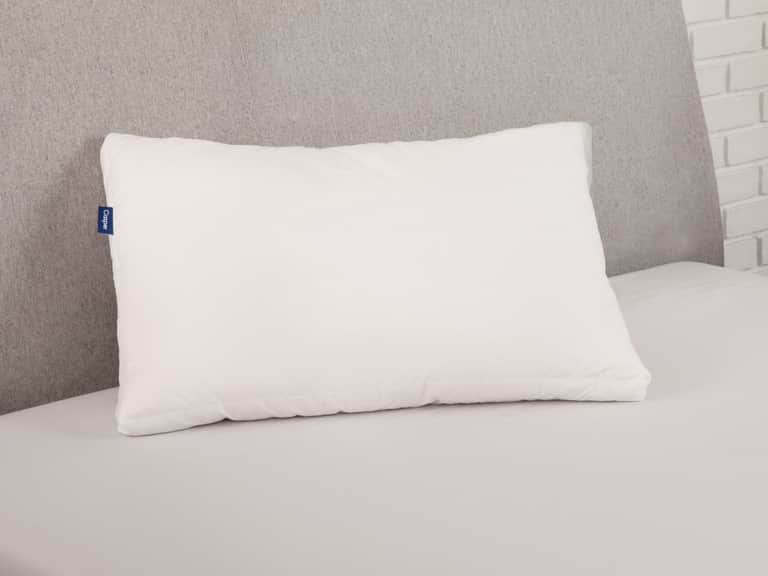
A five-chamber down design, for example, is intended to give the pillow structure while retaining a soft feel. The listed Down Pillow has a low profile and ethically sourced down, characteristics that may appeal to someone seeking a softer, lower pillow. But a low-profile label is only a starting point: the right fit still depends on sleeping position, body proportions and how the pillow compresses on the person’s mattress.
For a pillow with removable fill, adjustment offers a practical way to learn what works. The Naturepedic Organic Adjustable Latex Pillow is described as having an adjustable shredded-latex fill and an organic cotton cover. Its fill can be added or removed to change the loft and feel. That flexibility can help a sleeper test whether a slightly lower or higher profile feels more comfortable when the bed is raised. It is not a guarantee of a particular result; personal fit remains the deciding factor.
When considering an adjustable-fill pillow, check how the fill is accessed, whether extra fill is included, and what care the cover and insert require. The pillow’s materials and certifications may matter to some buyers, but those details do not replace a comfort test. A well-made pillow that is too high for a particular position is still the wrong fit for that sleeper.
A careful way to adjust pillow loft
Small changes are easier to assess than a complete reshaping. If a pillow has removable fill, start with the manufacturer’s care and adjustment instructions. Remove a modest amount, keep it clean and stored, then try the pillow for a few nights in the usual bed position. If support feels insufficient, add some back. The purpose is not to find a theoretically perfect quantity of fill; it is to learn which configuration feels supportive and comfortable over time.
- Establish a baseline: Note the bed’s usual setting, sleep position and current pillow feel before making a change.
- Change one thing at a time: Adjust fill or bed angle, rather than changing both simultaneously, so the effect is easier to recognize.
- Give the change a fair trial: A single brief test may not reflect a full night’s experience, particularly if the fill needs to settle.
- Record comfort plainly: Notice pressure, neck tension, pillow migration and whether the head feels supported. Avoid interpreting discomfort as a diagnosis.
- Keep the bed’s safety instructions in view: Follow the adjustable-base and pillow manufacturers’ guidance for use, weight limits and care.
If the pillow has no removable fill, try adjusting its placement before replacing it. A pillow may be positioned so that it supports the neck without crowding the head, or it may be better suited to a different sleeping position. Avoid stacking pillows simply to compensate for a poor fit: layers can shift, create uneven support or push the head into an uncomfortable angle.
How to recognize a mismatch
A pillow may be too high if the head feels pushed forward, the chin is crowded toward the chest, or the neck seems to resist the position. It may be too low if the head feels as though it is dropping backward or sideways, or if there is a noticeable unsupported gap. These are practical observations, not medical tests. The same sensation can have several causes, including the bed angle, mattress, sleep position or ordinary changes in comfort.
Also pay attention to movement. If the pillow slides down the bed as the head section rises, the issue may be placement or bedding rather than loft. Some sleepers find that a pillow with a less slippery cover, or a small adjustment to how it is positioned, helps it remain where intended. Do not attach or secure bedding in a way that conflicts with the adjustable base’s instructions or creates a safety hazard.
A pillow should not be expected to fix ongoing pain, numbness, breathing problems or other persistent symptoms. If discomfort continues despite reasonable changes—or if a new or severe symptom appears—consult a healthcare professional. They can help assess possible causes and advise whether changes to sleep position are appropriate.
Pillows, CPAP equipment and other considerations
Some sleepers use a pillow designed with a particular shape to accommodate a mask or tubing. Shape may affect comfort and how equipment sits, but a pillow does not treat sleep apnea. Anyone using continuous positive airway pressure (CPAP) should follow the instructions from their healthcare provider and equipment supplier. If a raised bed or pillow change causes the mask to shift, leaks or discomfort, seek guidance from the care team rather than assuming that a different pillow alone will solve the problem.
Care and hygiene also influence long-term comfort. Follow the product label for washing and drying; some covers are washable while the fill or insert may require spot cleaning. A pillow protector can reduce exposure to moisture and soil, but it should not be used if it changes the feel enough to undermine support. Reassess the pillow periodically: fill can settle, materials can wear, and a person’s preferred sleeping position can change.
A practical decision checklist
Before choosing among adjustable bed pillows, focus on the details that affect the experience in bed rather than on a single marketing term. Ask what position the pillow is meant to support, how much it compresses, whether its loft can be changed, and what maintenance it requires. If possible, test it in the raised position you expect to use. A return policy may be helpful when the fit cannot be judged in advance; read its terms before purchase.
- Does the pillow feel comfortable in the bed’s regular sleep setting?
- Does its height suit the way the sleeper rests on their back, side or stomach?
- Does it compress enough to avoid feeling too tall, or retain enough lift to feel supportive?
- Can the fill be adjusted if a small change is needed?
- Does the pillow stay in place as the bed moves?
- Are the care instructions, materials and cover suitable for the sleeper’s needs?
- Is the sleep setup compatible with any medical equipment and the bed manufacturer’s safety guidance?
Comfort is a moving target
There is no universal pillow loft for an adjustable bed. The useful height is the one that supports comfortable rest in the person’s real sleeping position, with the bed set as it is actually used. That answer can differ from night to night, and it can change when someone shifts position, changes pillows or raises the head section.
Start with observation, not assumptions. Consider where the head and neck feel supported, how the pillow compresses, and whether the raised angle changes the fit. If the pillow permits adjustment, make small, reversible changes and give each one time to prove itself. A thoughtfully chosen adjustable-fill pillow, including options such as the Naturepedic Organic Adjustable Latex Pillow, can make that process less of a guess. The measure of success is simpler: the pillow should feel comfortable, stay where it belongs and support the way the person chooses to rest.
This article provides general educational information and is not a substitute for medical advice. Follow the instructions supplied with your adjustable bed and sleep products, and consult a qualified healthcare professional about medical symptoms or changes to treatment.