Bedding · Adjustable Bed Guide
Choosing a Mattress Topper for an Adjustable Bed: Fit, Flex, and Feel
A topper can soften a surface, ease pressure, or simply make an existing mattress feel more inviting. But on an adjustable bed, comfort is only part of the test. The layer must also bend with the mattress, stay in place as the bed moves, and work with the dimensions and care needs of the whole sleep setup.
Published October 17, 2026
A mattress topper seems simple until the bed begins to move. Raise the head, lift the foot, or settle into a preset position, and the surface beneath you changes shape. A topper that lies smoothly on a flat mattress may crease, drift, or resist the bend when the base articulates. The question is not merely whether a layer feels comfortable in a showroom or on an unraised bed. It is whether it remains comfortable and secure through the positions you actually use.
That makes choosing a mattress topper for an adjustable bed an exercise in balance. Thickness affects cushioning and flexibility. Materials differ in how readily they contour. Dimensions and attachment details influence whether the topper stays aligned. Care instructions matter, too, because a layer that cannot be cleaned or handled conveniently may become an inconvenience in daily use.
There is no universal best topper for every adjustable bed. The right choice depends on the mattress, the base, the sleeper, and the reason for adding a layer in the first place. A careful assessment—made before buying and repeated after installation—can help prevent a small comfort upgrade from becoming a nightly source of adjustment.
Start with the mattress and base, not the product label
The phrase “adjustable-bed compatible” can sound definitive, but it does not answer every practical question. Compatibility may refer to a mattress’s ability to articulate, a topper’s ability to bend, or both. Before considering materials or feel, identify the equipment already in the room.
Check the mattress manufacturer’s guidance for use on an adjustable base and note any restrictions on added layers. Then review the base instructions. Some systems have limits related to total mattress thickness, weight, straps, retainers, or how bedding should be positioned. If the instructions are unclear, ask the manufacturer or retailer rather than assuming that a topper will have no effect.
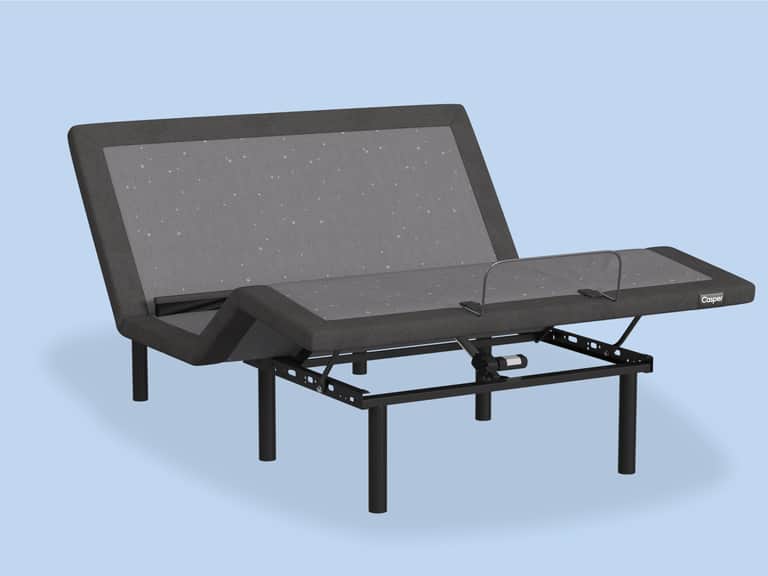
It is also useful to distinguish the adjustable base from the mattress. The base supplies movement; the mattress sits on it and flexes. The topper rests on the mattress, adding another layer that must follow the same changing profile. Even a supple topper can behave poorly if it is too large, too thick, or paired with a mattress that does not bend as intended.
- Record the mattress size and confirm that the topper’s listed dimensions match it.
- Check the mattress and base guidance for compatibility and operating limits.
- Look for existing mattress retainers, straps, or other features that may affect placement.
- Consider how often the bed moves and which head and foot positions are used most.
Flexibility is the first practical test
An adjustable bed changes from a flat plane into a curve. A topper must follow that curve rather than bridge across it or fold sharply at the hinge areas. The response depends on the material, its construction, its thickness, and how securely it rests on the mattress.
Flexible foam and latex toppers are often considered for adjustable beds because they can contour rather than behaving like a rigid panel. That does not make every foam or latex layer equally suitable. Density, firmness, internal structure, and thickness all influence how it bends and rebounds. Some materials feel soft but resist a tight bend; others flex readily yet may not provide the cushioning a sleeper wants.
Natural and synthetic materials can both vary widely. The material name alone is not a reliable measure of flexibility. A dense, thick latex layer may behave differently from a thinner, more pliable one. Foam formulations also differ in responsiveness and compression. Seek clear product guidance, and if possible, test the topper on the same type of base or obtain a return policy that allows a realistic trial.
Notice what happens at the transition points. When the head or knees rise, the mattress may form an angle that can pull the topper out of alignment. If the topper bunches at the bend, creates a pronounced ridge, or feels as though it is pushing back against the mattress, it may be too thick, too stiff, or poorly secured for that setup.
Thickness: more cushioning is not always more comfort
Thickness is among the most visible specifications, and it is tempting to treat a taller topper as a more generous one. On an adjustable bed, however, extra depth adds bulk to the material that must bend. A very thick layer may feel plush while flat yet create more resistance at the articulated sections. It may also increase the overall height of the mattress-and-topper combination.
A thinner topper may be easier to bend and less likely to shift, but it can provide only a modest change in feel. If the aim is to soften a firm surface, a layer that is too thin may not deliver enough cushioning. If the mattress already has substantial contouring, adding a deep topper could make the sleep surface feel less stable or change how easily the sleeper moves.
Instead of choosing by thickness alone, define the desired change. Is the surface too firm at the shoulders or hips? Does it feel uneven? Is the goal simply to add a little softness, or to substantially alter the mattress feel? The answer helps narrow the range. A small adjustment may call for a modest layer; a major comfort problem may be better addressed by reassessing the mattress itself.
Also consider height at the edge of the bed. A topper can alter how easy it is to sit down, stand up, or transfer in and out. For a person who uses the bed for mobility support, a small increase in height may matter. Caregivers should account for the sleeper’s movement and the bed’s surroundings, rather than focusing only on softness.
Match the material to the feel you want
Topper materials shape the sensation of the surface, but personal preference and body position matter as much as the label. Consider how quickly a material responds, whether it retains warmth, how much it compresses, and how easy it is to reposition on it. A sleeper who wants a close, contouring feel may prefer a different layer from someone who values buoyancy and easy movement.
Memory foam
Memory foam is known for contouring under pressure. Depending on its formulation and thickness, it may soften the feel of a mattress and reduce the sense of pressure at contact points. Some versions respond more slowly than others, which can feel enveloping; others recover more quickly. On an adjustable base, look for a foam layer that bends with the mattress and does not create a stiff ridge at the hinge points. Consider temperature preferences and the ease of changing position as well.
Latex
Latex is often described as resilient or buoyant, with a quicker response than traditional slow-response foam. That can make movement on the surface feel easier for some sleepers. Latex products vary in construction and feel, however, and not every layer will be equally flexible. Check product specifications and compatibility guidance, especially if considering a thicker or firmer slab.
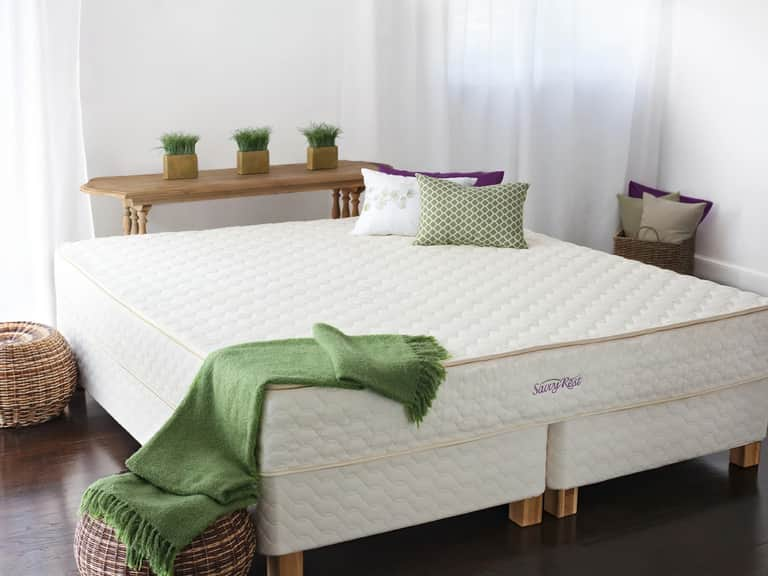
For example, the Savvy Rest Serenity Latex Mattress is described as compatible with an adjustable base and uses customizable layers of latex beneath an organic cotton and wool casing. It is a mattress rather than a topper, so it is not a substitute for evaluating topper fit; it illustrates why the underlying mattress’s stated compatibility matters when planning an adjustable-bed setup.
Fiber-filled and quilted layers
Fiber-filled pads can add a softer, more cushioned surface and may be easier to launder than some foam layers, depending on their construction and care label. Their loft and stability can change with washing and use. A quilted pad is not necessarily equivalent to a thick, pressure-relieving topper. Check whether its purpose is comfort, protection, or both, and assess whether the construction can follow the bed’s movement without shifting.
Fit is about dimensions and movement
A topper should match the mattress’s size as closely as possible. A mismatch can leave edges exposed, hang over the sides, or create excess fabric that catches during articulation. Measure the mattress rather than relying solely on an old label, particularly if it has an unusual depth or has been paired with a mattress encasement or protector.
Length and width are only part of fit. The topper should sit flat without being stretched tight. A cover or elastic skirt that is too small may pull the material out of shape; one that is loose may allow it to drift. If the topper has straps or corner bands, inspect how they attach and whether they interfere with a mattress retainer or the base’s moving parts. Do not route straps around mechanical components unless the manufacturer specifically permits it.
Bed movement can gradually expose a weak fit. A topper may begin centered and migrate after repeated elevation. Make a simple alignment check: note where its edges sit relative to the mattress, raise and lower the bed through normal positions, then check again. Repeat the test after getting in and out of bed. Small shifts that accumulate over several nights can become noticeable bunching or an uneven surface.
For a split adjustable setup, confirm the dimensions and construction for each side. Two independently moving mattresses may require separate toppers rather than one continuous layer. A single topper spanning a split can bridge the gap, resist independent movement, or shift as the two sides change position at different times. The bed’s configuration and the manufacturers’ instructions should guide the decision.
Secure the topper without compromising movement
Some toppers rely on their own weight and a close fit; others use elastic corners, straps, or a fitted cover. The best arrangement is one that holds the layer in place while allowing the mattress to articulate. More fastening is not automatically better. Over-tight straps can distort a topper or exert unwanted pull as the base moves.
Use only attachment methods intended for the product, and keep fabric clear of hinges, motors, cables, and moving joints. After fitting, operate the base while watching the topper from the side and from the foot of the bed. Look for trapped material, pinched fabric, or a section being pulled away from the mattress. If anything appears to interfere with movement, stop and correct the setup before regular use.
Sheets can affect the result. Deep-pocket sheets may be needed to cover the mattress and topper together, but extra fabric should not be so loose that it tangles or catches. A waterproof protector, if used, adds another layer and may change the surface’s feel or flexibility. Build the complete bedding arrangement before judging comfort: mattress, topper, protector, fitted sheet, and any other layer all work as a system.
Assess feel in the positions you actually use
A flat-bed test is incomplete. Settle into the topper in the positions that are part of the nightly routine: flat, head raised, feet elevated, or any other manufacturer-approved setting. Spend enough time in each to notice pressure, support, warmth, and whether the surface feels stable. A brief sit on the edge cannot reveal how the topper behaves after the bed has been raised for a while.
Pay attention to the points where the body meets the mattress. Side sleepers may notice pressure at the shoulder and hip; back sleepers may be more attentive to how the lower back feels; stomach sleepers may be sensitive to whether the added layer changes their alignment. These are individual observations, not diagnoses. A topper is a comfort layer, not a treatment for a medical condition.
If two people share the bed, evaluate both sides. Differences in body size, preferred firmness, temperature, or sleep position can make a single shared layer feel unlike a neutral compromise. On a split system, independent movement may call for separate comfort solutions. When a person has pain, breathing concerns, reflux, limited mobility, or another health issue, discuss positioning and equipment choices with an appropriate healthcare professional.
Care instructions are part of the decision
Topper care varies by material and cover. Some covers can be removed and washed, while the inner layer may require spot cleaning or professional care. Others should not be exposed to water, high heat, direct sunlight, or aggressive cleaning agents. Read the care label before purchase, not after a spill.
Consider how practical it will be to remove and replace the topper. A heavy or bulky layer can be difficult for one person to lift, especially on a bed that sits within a frame or has limited clearance. If regular washing is important, a washable cover or protective layer may make upkeep easier, provided it does not compromise fit or flex.
Allow a topper to dry fully before putting it back on the mattress. Trapped moisture can affect bedding and may create odor or hygiene concerns. Follow the manufacturer’s directions and avoid improvised heat or cleaning methods that could damage the materials.
A practical compatibility check before buying
Product descriptions can help, but the most useful answers are specific. When comparing options, look for stated use with adjustable bases, recommended mattress types, dimensions, thickness, attachment details, weight guidance, and care requirements. If key information is missing, ask the seller or manufacturer to clarify it in writing.
- Confirm the foundation: Verify that the mattress itself is suitable for the adjustable base.
- Check the fit: Match the topper’s dimensions to the mattress and account for any split configuration.
- Ask about articulation: Find out whether the topper is designed or tested to flex with a moving bed.
- Review thickness and feel: Choose enough cushioning for the goal without adding unnecessary bulk.
- Inspect fastening: Determine how the topper stays in place and ensure attachments will not obstruct moving parts.
- Understand the trial and return terms: Confirm how a used or opened topper can be returned if it proves incompatible.
- Read the care label: Make sure cleaning and handling requirements suit the household.
A return window is especially valuable because the real test takes place at home, on the actual mattress and base. Keep packaging and documentation until the topper has been tested through ordinary use, and follow the seller’s return conditions carefully.
Common signs that a topper is not working
Persistent bunching, repeated migration, or a ridge that forms when the bed is raised may indicate poor fit or insufficient flexibility. A feeling that the mattress is being pulled out of shape is another reason to inspect the installation. Do not try to solve a movement problem by adding improvised ties around the frame or base; first check the product instructions and attachment method.
Discomfort can also signal a mismatch, though it may take time to identify the cause. If the surface feels too warm, too soft, too firm, or difficult to move on, compare the sensation with how the mattress feels without the topper. A simple, controlled trial can help isolate whether the added layer is responsible. Make only one change at a time and avoid interpreting a short adjustment period as proof that a product will or will not work for everyone.
If the adjustable base makes unfamiliar noises, operates unevenly, or appears to be obstructed, consult its manual and contact the manufacturer if needed. Bedding should never be allowed to conceal a mechanical problem or interfere with safe operation.
The bottom line: test the whole sleep surface
The best mattress topper for an adjustable bed is not simply the softest, thickest, or most highly rated. It is the one that matches the mattress, bends with the base, stays aligned, and delivers the intended change in comfort without creating a new problem. Material, thickness, size, attachment, and care all contribute to that result.
Begin with the equipment instructions and the reason for wanting a topper. Compare dimensions and construction, then test the complete bed in its usual positions. Watch for shifting and bunching as carefully as you notice softness. A few deliberate checks can make the difference between a layer that quietly improves the bed and one that fights its movement every night.
Most importantly, treat comfort choices as personal. A topper may improve how a surface feels, but it cannot guarantee better sleep or replace medical guidance. When health or mobility concerns shape the decision, coordinate the bedding setup with appropriate professional advice and the equipment manufacturer’s safety instructions.
Quick checklist
- The mattress and adjustable base are confirmed as compatible.
- The topper matches the mattress dimensions and does not bridge a split unintentionally.
- The material and thickness can follow the bed’s movement without excessive resistance.
- Any straps or fitted edges secure the topper without catching on moving parts.
- The full setup has been tested in the positions used most often.
- Care, cleaning, and return requirements are clear before the topper is put into regular use.